
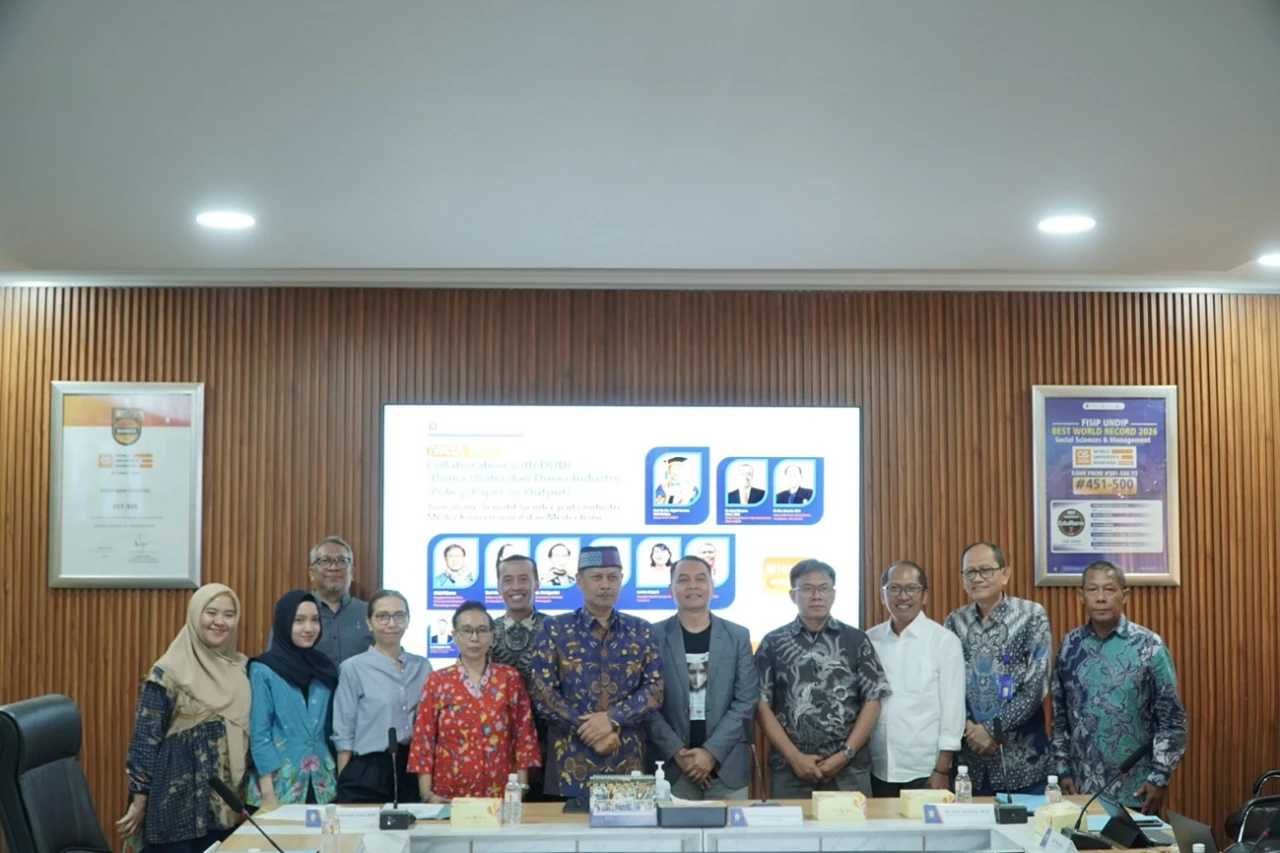
Semarang – The Media Communication, Journalism, and Gender Expertise Cluster (KBK KMJG), Department of Communication Science, Faculty of Social and Political Sciences (FISIP), Diponegoro University, held a Focus Group Discussion (FGD) entitled “Gender-Sensitive Journalism in the Conventional Media and New Media Industry” on Thursday (September 10, 2026). This activity is part of the 2026 World Class University (WCU) Program Collaboration with DUDI (Business and Industrial World).
The Dean of FISIP UNDIP, Prof. Dr. Drs. Teguh Yuwono, M.Pol.Admin., expressed his appreciation and gratitude for the holding of the FGD as a space for academic collaboration between universities, the media industry, professional institutions, regulators, and civil society.
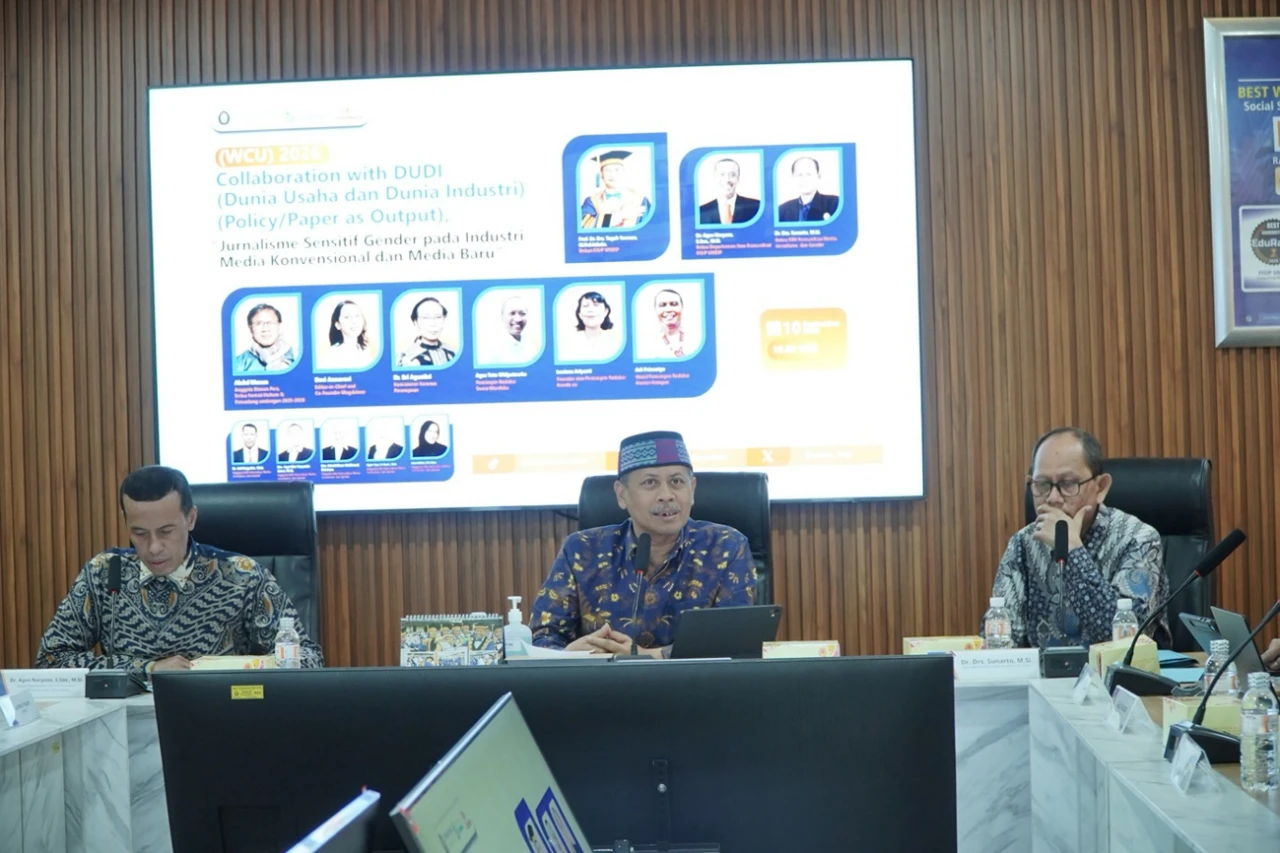
“The media has a strategic role in shaping the way society understands social reality, so gender-sensitive journalism is important to encourage more fair, inclusive, and stereotype-free reporting,” he explained.
The Head of the Department of Communication Science, Dr. Agus Naryoso, S.Sos., M.Si., emphasized the importance of collaboration between universities and DUDI so that academic knowledge can meet with the experiences and needs of professional practice.
Meanwhile, the Chair of KBK KMJG, Dr. Drs. Sunarto, M.Si., highlighted the still unequal representation of women in the news and the importance of factual journalism that provides opportunities for subjects to voice their own experiences.

The six speakers presented complementary perspectives. Adi Prinantyo from Harian Kompas highlighted the patriarchal culture and gender stereotypes that still influence the representation of women in the media. Agus Toto Widyatmoko from Suara Merdeka emphasized editorial policies that support equality and the use of diction that does not discredit women.
Devi Asmarani from Magdalene affirmed that a gender perspective concerns not only what is covered but also how journalists view power relations and the structural context of an issue. Luviana Ariyanti from Konde.co encouraged feminist journalism to break the silence, challenge dominant narratives, and amplify the voices of women and marginalized groups.
Abdul Manan from the Press Council emphasized the application of the Journalistic Code of Ethics and the importance of avoiding stereotypes, discrimination, and sensationalism. Meanwhile, Rr. Sri Agustini from the National Commission on Violence Against Women (Komnas Perempuan) encouraged gender and victim perspectives to become part of editorial standards applied systematically.
The results of the FGD will serve as the basis for drafting a policy brief as an academic and practical contribution to promoting more inclusive and responsible journalism.

(Agne Yasa)